
Understanding what happened to us can help us understand what is happening inside us.
Why Understanding Trauma Matters
As we explore the obstacles that keep us from experiencing the freedom of God’s Kingdom, it helps to understand something about how our brains are designed to work and how trauma can affect them.
Many people do not even consider the possibility that they have experienced trauma. Often this is because what happened to us simply felt like “the way things were.” We may have learned to endure suffering or difficult circumstances without realizing how those experiences shaped our beliefs and emotional responses.
Understanding how the brain processes trauma helps us understand why we sometimes react in ways we do not fully understand.
Why This Matters for Marriage
Marriage is one of the closest and most emotionally intimate relationships we experience. Because of that closeness, it often becomes the place where our deepest wounds and beliefs surface.
Many conflicts in marriage are not actually about the present situation. Instead, they are connected to past experiences and beliefs that shape how we interpret what our spouse says or does.
A simple comment from a spouse can sometimes trigger a reaction that seems much larger than the situation itself. When this happens, our brain may be responding not only to the present moment but also to past experiences that formed our beliefs about ourselves and others.
Understanding trauma helps us move from blaming each other toward understanding what may actually be happening inside us.
Understanding the Brain.
Science has discovered that the brain’s left and right hemispheres perform different functions.
Generally speaking:
Left Brain
- Logical
- Analytical
- Language and knowledge
- Sequential thinking
Right Brain
- Emotional
- Relational
- Creative
- Intuitive
- Identity formation
For a healthy life, the brain must coordinate and synchronize information between both sides.
When both hemispheres work together, we are able to access both truth and emotional regulation.
This diagram illustrates left brain and right brain functions. The brain splits up functioning, and then coordinates and synchronizes information processing between the two halves.

A Simple Illustration
When I was teaching art many years ago, I used a fascinating exercise to help students learn to draw.
I would place this drawing by Pablo Picasso in front of a student and ask them to redraw it.
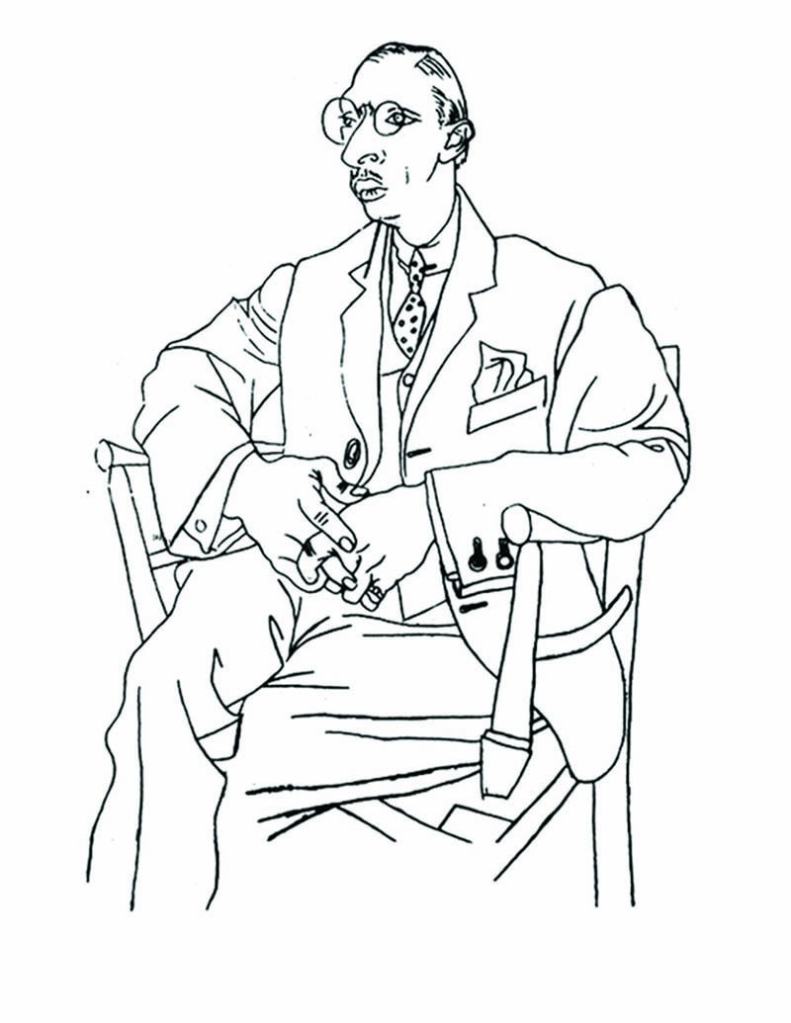
Most students would look at the picture and say, “There is no way I can draw that.”
When they tried, their drawings often looked very distorted. Their brains were interpreting the image through familiar symbols rather than seeing what was actually there.
Without fail, (after complaining and saying “no way!”), students looked at the drawing, and with much trepidation, would make their first attempt to reproduce Picasso’s drawing as they “saw” it. Interestingly enough, most often what their finished drawing would look like is something like this:
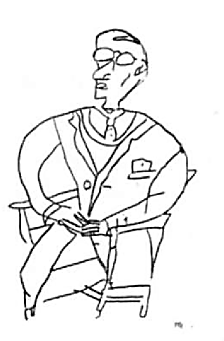
Then I would have the student turn the Picasso drawing upside down in front of them so they would be looking at the drawing upside down. Then I said, “Now reproduce it.” Suddenly something remarkable happened. The drawing above is from the same student as the drawing below:
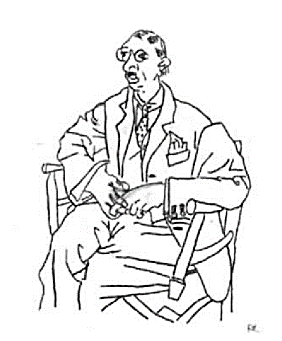
Their drawings improved dramatically.
Why?
Because turning the image upside down prevented the left brain from labeling what it saw. Instead, the right brain began noticing shapes, lines, and spaces more accurately.
Seeing God Clearly
This illustration has an important spiritual parallel.
Sometimes we think we understand who God is, but what we are seeing is actually shaped by our past experiences rather than by truth.
If our understanding of God remains only intellectual…processed primarily through the left brain, we may know correct information about God but struggle to experience Him relationally.
God designed our brains to experience truth through both knowledge and relationship.
When both sides of our brain work together, we can experience God not only as an idea but as a living relationship.
Think about the significance of this for a moment. In the same way, we can have a view of God that is only what we “think we see”. Both sides of our brain, when functioning the way it is designed, allows us to truly see and experience fully what God wants for us. When our control center in our brain is functioning the way God created it, our right brain connects to our left brain so we can access what we know to be true.
How Trauma Affects the Brain
When children experience healthy bonding early in life, the left and right brain develop in harmony. This allows a person to regulate emotions and process life experiences in healthy ways.
However, when trauma occurs early in life, this integration can be disrupted.
When stressful situations arise later in life, the right brain -the emotional center – may shut down or become overwhelmed. In those moments we may struggle to access what the left brain already knows to be true.
This is why someone may intellectually know that God loves them, yet still feel afraid, rejected, or ashamed.
Expanding Our Understanding of Trauma
For many years I believed trauma was something that happened only to other people.
But trauma can occur in many ways.
Yes, trauma can come from terrible things done to us by harmful people.
But trauma can also come from good things that should have happened but did not.
Jim Wilder explains it this way:
“Traumas are the wounds left in our identities that render us less than what God had in mind when He created us. Traumas block growth. They block or slow proper maturity.”
– Jim Wilder
When it comes to living free, it’s vital that we recover from our traumas and to recover, we must first properly and thoroughly identify the wounds that occurred from those experiences and then learn to understand and embrace what James was teaching when he wrote about growing up in every way: “then we will be complete, not lacking in anything.”(James 1:4); or “count it all joy, my brethren, when you meet various trials, for you know that the testing of your faith produces steadfastness.” James 1: 2-3
Two Types of Trauma
Type A Trauma
Type A trauma occurs when good things we needed were missing.
Examples include:
- Not being cherished or celebrated
- Lack of affection or emotional connection
- Parents who did not affirm identity
- Conditional love instead of unconditional love
- Lack of healthy boundaries
- Being valued primarily for performance
These experiences often affect the areas of the brain responsible for emotional regulation and identity formation.
Jim Wilder refers to these as fractures of the soul.
Type B Trauma
Type B trauma occurs when bad things happen.
Examples include:
- Physical abuse
- Verbal abuse
- Sexual abuse
- Abandonment
- Witnessing violence or abuse
These traumas often affect the brain’s memory system.
Sometimes extremely traumatic experiences are partially forgotten because the brain protects itself through a process similar to amnesia.
Even when the memory fades, the beliefs formed during those experiences can remain.
How Trauma Shows Up In Marriage
These wounds do not disappear simply because we become adults.
They often appear most clearly in our closest relationships.
For example:
Someone who experienced Type A trauma may struggle with:
- feeling unappreciated
- fearing rejection
- needing reassurance
- feeling deeply hurt by criticism
Someone who experienced Type B trauma may struggle with:
- trusting others
- emotional shutdown during conflict
- strong reactions to perceived control
- feeling unsafe even in loving relationships
When these wounds are triggered, couples may begin reacting to old pain rather than the present situation.
Understanding this can bring compassion and patience into our relationships.
Trauma Responses in Relationships
- Fight
- anger
- criticism
- control
- Flight
- avoidance
- distraction
- busyness
- Freeze
- emotional shutdown
- silence
- withdrawal
- Recognizing these responses can help couples move from blame to understanding.
Emotional Pain and Physical Pain
Research shows that emotional pain activates many of the same regions of the brain as physical pain.
Experiences like rejection, shame, abandonment, or humiliation can create deep emotional wounds.
Because of this, emotional trauma can sometimes take longer to heal than physical injuries.
The Joy Center
God designed the brain with what some researchers refer to as the joy center.
This center helps regulate emotions and allows us to remain ourselves even under stress.
It helps regulate the six unpleasant emotions:
- fear
- anger
- sadness
- disgust
- shame
- hopelessness
When the joy center is healthy, we are able to remain emotionally stable and relationally connected even during difficult circumstances.
How Identity Develops
In an interview with Michael John Cusick, Jim Wilder talks about how our brain is formed from an early age and how our identity, character and joy center in our brains are affected and shaped. Listen in.

Think about what Jim was saying:
- Our brains need to be taught how to be human.
- Our brain when we are born was wired to look at faces, specifically the left eye of our parent, which most often would be our mom.
- There are over 200 muscles around the eye that are capable of showing “joy” and delight.
- We learned as an infant then, to look at the face of our parent to “delight” in us.
- At 5 months old, the infant discovers that the face looking at them has thoughts and impressions. And the infant begins to replicate them.
- Jim says; “The things that fire together, wire together.”
- Critical: Our brain as an infant, learns to mirror the parent.
- As an infant we have tons of moving parts and neurons rapidly growing in our brains, Jim makes the point; the one’s we use, get strengthened.
- At 4 years old, those things that weren’t used in our brains, get deleted.
- What we learn is that our brain is shaped to run and operate; speak and think according to the brain that we mirrored.
- This is very powerful in how both our left and right brain develop an identity and this is how our character is shaped and influenced.
What If Joy Was Missing?
What if the person you relied on as an infant to “delight” in you, was depressed, abused, angry, disconnected, afraid, hopeless? How might that shape ones identity?
If the caregiver a child depended on was depressed, angry, disconnected, or emotionally unavailable, that experience can shape how the child eventually sees themselves.
Identity becomes shaped not by delight and connection but by fear, performance, or insecurity.
This is why identity wounds are so powerful.
Identity and Our Relationship with God
If we only experience God intellectually through knowledge alone, we may understand theology but struggle to experience identity as God’s beloved child.
But when we begin relating to God relationally, allowing Him to shape our identity, something changes.
We begin to see ourselves the way God sees us.
And the truth is:
God delights in you.
That delight is part of your true identity.
- What if all we see of God comes from our left brain alone which as we are learning is knowledge based? Knowledge is good for us to help identify our errors. But if we stop there and only experience God intellectually, what happens to our identity?
- What will I become like if I allow God to develop my identity as the true me. Within an intimate attachment relationship with God? Using both my left and right brain?
- Without a full picture, we can develop who we are incorrectly because we focus our identity on how others see me, not how God sees me.
- We can embrace and grow in our ability to see ourselves as God sees us: He is delighted!. That is our identity.
- This is one of the purposes of community. To grow our capacity to live free and in joy through life giving relationships with others.
What is Joy Capacity?
Joy capacity is the strength to handle all situations. To illustrate the concept of joy capacity, consider the boulder and little rock below.
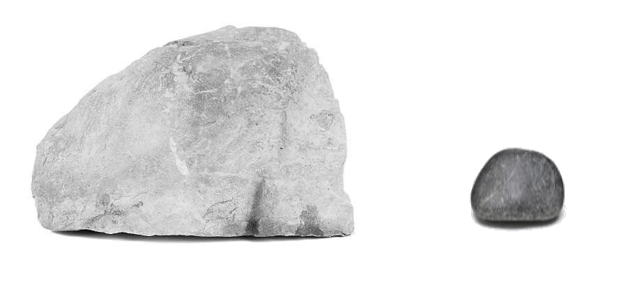
We need more joy capacity than the “hole” created by our hurts and fears. In the illustration, the large rock represents anxiety or lie-based beliefs that stem from unresolved trauma, while the smaller rock represents the amount of joy capacity we currently have to overcome those struggles. If our ability to return to joy is not stronger than the anxiety or lies we carry, we will find it difficult to recover from painful situations.
As we move toward healing and wholeness, building our joy capacity becomes essential. When we attempt to confront unresolved trauma or lie-based beliefs without sufficient joy capacity, our brains will often “shut down” or pull us away from those memories in order to protect us from being retraumatized.
Joy Capacity and Marriage
Joy capacity plays a significant role in marriage. When two people enter a relationship, they bring with them their own histories, wounds, fears, and emotional patterns. When stress, conflict, or disappointment arise—as they inevitably will—the ability to return to joy becomes essential.
If our joy capacity is small, difficult emotions like anger, fear, shame, or discouragement can quickly overwhelm us. When that happens, we often react in ways that damage connection—through criticism, withdrawal, defensiveness, or attempts to control the other person.
But when joy capacity is growing, something different becomes possible. Even in moments of disagreement or stress, we can remain relationally connected. Instead of reacting out of fear, we are able to listen, remain present, and move back toward love and understanding.
In this way, marriage becomes one of the primary places where God helps us grow our joy capacity. As spouses learn to delight in one another, return to connection after conflict, and extend grace during difficult moments, love bonds deepen and maturity develops.
Over time, a marriage built on joy and connection becomes a powerful reflection of God’s design for relationships—two people learning together how to live in freedom, truth, and love.
The Role of Community
One of God’s purposes for Christian community is to help restore our capacity for joy and relational connection.
Healthy relationships help retrain our brains to experience:
- safety
- connection
- joy
- trust
Through life-giving relationships, we grow in our ability to live freely in God’s Kingdom.
Reflection
Consider these questions:
How might past experiences or trauma influence the way you respond to your spouse or others today?
Have there been moments when your emotional reaction felt much stronger than the situation itself?
Could it be possible that your brain was responding not only to the present moment but also to past wounds?
God’s desire is not simply to help us manage our reactions.
His desire is to bring healing so that we can experience:
- freedom in our hearts
- peace in our relationships
- joy in the life He designed for us
Please listen to the audio clip from Jim Wilder discussing identity, joy, and how the brain can process shame, both negatively and positively.


