What on Earth Does God’s Kingdom Have to Do with Freedom?
Jesus does not want us to miss the freedom that God’s Kingdom brings.
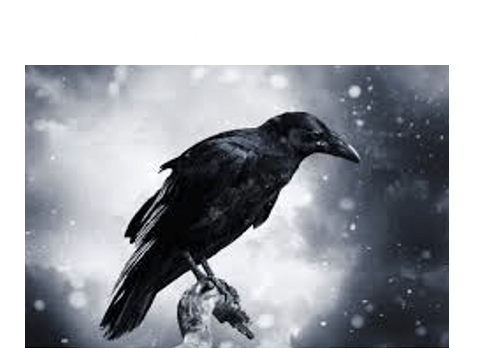
When Jesus told His followers to “consider the ravens,” He was doing more than simply pointing out a bird. The raven becomes a symbol of something deeper: God’s nature, His care, and the kind of life He invites His children to live when they trust in His Kingdom.
To understand that invitation, we first need to understand what Jesus meant by the Kingdom of God.
Jesus’ Central Message
In the Gospel of Matthew, we see the central message Jesus began preaching when His ministry started:
From that time Jesus began to preach, and to say, Repent: for the kingdom of heaven is at hand.
Matthew 4:17 KJV
This was not a minor theme in Jesus’ teaching. It was the central announcement of His ministry.
Jesus came to introduce us to God’s Kingdom.
Yet somewhere along the way, many of us have misunderstood what that means.
The Common Understanding
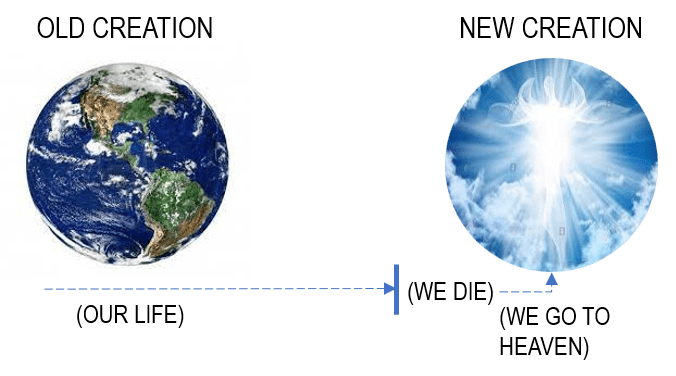
Many people assume something like this:
We live in a broken and fallen world.
We struggle through life, doing the best we can.
If we behave well enough and believe the right things, then when we die, we go to heaven.
Only then will we experience the freedom Jesus promised.
This way of thinking views God’s Kingdom as something that exists far away and sometime in the future. This is illustrated below:
But that’s not what Jesus said.
What Jesus Actually Said
Jesus said:
“The Kingdom is at hand.”
In other words:
It is here.
Jesus came announcing that God’s reign and His rule, His authority, His way of life: was breaking into our world.
God’s Kingdom was intersecting with our broken world.
It was the beginning of what we might call God’s Kingdom invasion.
God was reclaiming what He originally created.
Living Two Realities
Because of Jesus, we now live in an interesting tension.
We still live in a broken world.
But at the same time, we have access to God’s Kingdom.
Tim Keller once described Christians as living as “resident aliens.”
We still live in this world, but we belong to another Kingdom.
That means we can begin to live differently.
We can discover our true identity.
We can experience the freedom Jesus spoke about—not just someday in heaven, but in this life. This is at the intersection of the world and God’s Kingdom.
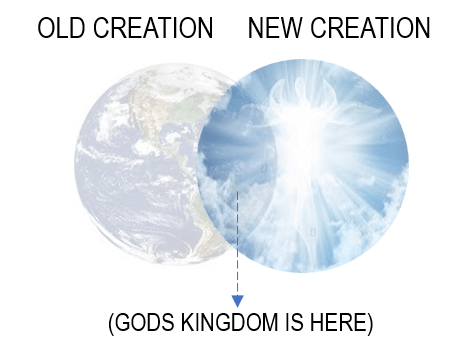
I recently came across this animated video from Tim Mackie, founder of the Bible Project, that describes the idea of God’s Kingdom intersecting Earth more completely.
https://bibleproject.com/videos/heaven-and-earth/
Why This is Hard to Believe
For many people, this idea feels almost impossible to believe. Why?
One reason it is difficult for many of us to believe that God’s Kingdom is available now is because we still live in a broken world. We continue to experience pain, injustice, conflict, and suffering. Because of this, it can feel as though God’s Kingdom has not yet arrived.
When Jesus came, He ushered in God’s Kingdom, but its full completion has not yet occurred.
In other words, God’s Kingdom has already begun, but because it has not yet been fully fulfilled, life’s experiences can make freedom feel out of reach.
Many people carry deep wounds.
Some struggle with unforgiveness toward themselves or others.
Others feel trapped by circumstances that seem too painful to overcome.
Some people spend their lives trying to numb their pain—searching endlessly for ways to escape it.
Others try a different path: performance and self-reliance.
They believe freedom will come if they work hard enough, behave well enough, or solve their problems through sheer effort.
But both paths miss something important.
Freedom does not come from escape.
And it does not come from performance.
The Invitation of the Kingdom
Jesus’ message was radically different.
He announced that God’s Kingdom is “at hand”.
It is available now through Jesus and the Holy Spirit.
It can become our home even while we still live in this world.
When we begin to understand that God’s Kingdom has already collided with earth, something changes.
We begin to realize that Jesus’ invitation to “consider the ravens” is actually a reminder that we are already living under God’s care.
If God feeds the ravens: creatures that struggle and search for survival, then how much more can we trust the care of our Father who rules this Kingdom?
The Kingdom of God is here for us to live in it. It can be our home today. God and his reign has already collided with earth and when we begin to grasp that, we can begin to see that Jesus, in his challenge to consider the Raven, is assuring us that we are in fact, already in the Kingdom of God, and therefore are safe and can place our faith and trust fully in it.
Jim Wilder describes it this way:
The only thing that allows you to live without fear is to live in the Kingdom of God.
Jim Wilder, Renovated
Who is Jim Wilder?
I was first introduced to Dr. Jim Wilder by Diane Stores, Founder of Door of Hope, while serving as a men’s ministry director at Door of Hope.
Dr. Wilder has spent more than thirty years training leaders, counselors, and pastors in how spiritual transformation actually happens. His work combines insights from Scripture, brain science, and relational development to help explain how people grow into emotional and spiritual maturity.
If you are unable to see yourself living in the Kingdom of God, you will constantly be troubled by the things you either didn’t get in this life or the things you have wanted. And you will be tempted to take things that are not good for you. When that doesn’t work you will be disappointed and hurt and angry and you will probably reject yourself and others around you. You will not be able to love those that are in your presence. You will be filled with fear because you are trying to run your own kingdom.
Jim Wilder, Renovated
Embracing Powerlessness: A Step Toward Freedom
As we saw in Week 1, Jesus draws attention to the raven and points out something remarkable:
Ravens do not plant.
They do not harvest.
They do not store food in barns.
In that sense, they are powerless to secure their future in the ways humans try to.
And yet Jesus says that God feeds them.
The raven lives in a world where survival requires searching and effort, yet it ultimately depends on God’s provision.
To live in God’s Kingdom today requires us to embrace something similar: our own powerlessness under the authority and sovereignty of God.
Recognizing that we cannot make ourselves whole through our own effort is often the first step toward genuine wholeness and freedom.
The Paradox of Powerlessness
From the world’s perspective, powerlessness feels weak and uncomfortable. It feels like losing control.
Our natural response is usually to compensate.
We try harder.
We perform better.
We pray more.
We serve more.
We attend church more faithfully.
Sometimes these actions even become attempts to prove something to God—to convince Him that we are worthy of His care.
But there is a significant difference between trying to conform our behavior to the truth and being transformed by the truth.
Self-effort often focuses on controlling behavior.
True transformation is the work of the Holy Spirit changing us from the inside out.
Ironically, our attempts to fix ourselves can sometimes keep us from hearing God and receiving the transformation He wants to bring.
What the World Offers vs. What God’s Kingdom Offers
Tim Keller is one of my favorite pastors and teachers. He often spoke about the contrast between what the secular world offers and what God’s Kingdom offers.
He pointed out that every human being is searching for certain essential things.
But the solutions offered by the world are very different from what God provides.
| What we all need | Secular World Offers | God’s Kingdom Offers |
| Meaning | You create your own meaning | You receive meaning that suffering can’t take away |
| Satisfaction | Satisfaction is based on circumstances | Satisfaction is not based on circumstances |
| Freedom | Lack of limitations on your options | Boundaries that liberate us to be fully alive & loving |
| Identity | Identity determined by looks, actions, achievement and performance | God is my foundation and gives you powerful resources to build an identity based not on your performance |
| Hope | What I achieve and work for gives me hope | What Jesus already achieved gives me hope today and eternally |
Living in both this world and God’s Kingdom require real transformation, not just behavior management
Transformation vs. Behavior Management
The Bible tells us:
“Be transformed by the renewing of your mind.”
– Romans 12:2
This kind of transformation cannot be achieved through self-effort alone.
It is something the Holy Spirit does within us.
Many people have simply learned to manage their struggles better than others. But managing behavior is not the same thing as transformation.
Here’s another voice I’m lobbing into this exploration; Ed Smith. I met Ed at one of his conferences in Minnesota. Ed Smith is the developer and founder of Transformation Prayer Ministry. (TPM) He holds a master’s degree in education (focus in marriage and family counseling and a Doctorate in Ministry). I have found the principles behind Transformational Prayer to be incredibly insightful and a helpful tool to navigate lie-based beliefs that cause bondage.
Ed Smith explains this distinction well:
Some of us have simply learned to manage our condition better than others but merely managing one’s behavior is not God’s desire for anyone, nor is controlling behavior equivalent to genuine transformation. Much of what we call spiritual behavior is really nothing that an unbeliever couldn’t do if he were to set his mind on doing it. Rather, God desires transformation that is the effortless expression of His fruit in our lives. – Ed Smith, The Essentials of TPM
God’s goal is not merely self-improved behavior.
His goal is transformed hearts.
Learning Contentment in the Kingdom
When we begin to live in God’s Kingdom, passages of Scripture begin to make more sense.
For example, Paul writes in Philippians:
“The things you have learned and received and heard and seen in me, practice these things, and the God of peace will be with you.”
– Philippians 4:9
And later he says:
“I have learned to be content in whatever circumstances I am.”
– Philippians 4:11
Paul wrote these words from a Roman prison.
Yet he experienced peace and contentment.
This kind of freedom is not theoretical. It was Paul’s lived experience.
And it is available to us as well when we begin to trust the Kingdom of God.
So what keeps us from experiencing this freedom?
“He (the Devil) was a murderer from the beginning, not holding to the truth, for there is no Jesus gives us an important clue.
“He (the devil) was a murderer from the beginning… When he lies, he speaks his native language, for he is a liar and the father of lies.”
– John 8:44
Scripture tells us that the enemy works primarily through deception.
Two areas are especially targeted:
- The truth about who God is and what His Kingdom is like
- The truth about who God says you are
How Trauma and Wounds Affect Our Beliefs
Experiences such as abuse, trauma, rejection, or deep hurt can distort how we see ourselves and how we see God.
To protect ourselves, we often build emotional walls.
Those walls may help keep painful things out.
But they also keep good things out.
When these wounds remain unresolved, we may begin to believe things that are not actually true.
For example, we may begin to see God as:
- impossible to please
- manipulative
- cruel
- distant
- judgmental
- likely to abandon us
When we see God this way, trusting Him becomes very difficult.
What is a core lie based belief?
The emotional pain we experience today does not always come directly from past events themselves.
Often it comes from what we came to believe about ourselves or about God in those moments.
In other words, it is not simply the memory of the event that causes ongoing pain.
It is the belief that formed in the middle of that experience.
These beliefs are often called lie-based beliefs.
Examples include:
- “I am worthless.”
- “It was my fault.”
- “Something is wrong with me.”
- “I am unlovable.”
- “I will always be rejected.”
These beliefs may feel completely true.
But feelings do not determine truth.
A lie-based belief is something we believe to be true experientially even though it is not actually true.
When Lies Shape Our Emotions
Our emotions are deeply connected to what we believe.
If we believe something that is not true, our emotional responses will still follow that belief.
This is why people can know biblical truth intellectually yet still feel trapped emotionally.
The belief underneath has not yet changed.
And when lies shape our beliefs, they slowly erode:
our joy
our peace
our identity
Pure Joy
James writes:
“Consider it pure joy… whenever you face trials of many kinds, because the testing of your faith produces perseverance. Perseverance must finish its work so that you may be mature and complete, not lacking anything.”
– James 1:2–4
The word pure means:
not mixed with other substances
free from contamination
In this sense, pure joy means joy that is not contaminated by circumstances.
Joy that does not depend on everything going well.
Joy that remains even in difficulty.
And often, it is false beliefs that contaminate our joy.
Moving Toward Truth
Every person has experienced pain in life.
No one escapes the effects of a broken world.
But our emotions and responses are shaped largely by what we believe to be true.
If we believe truth, our emotions and actions move toward health and freedom.
If we believe lies, our emotions and actions follow those lies.
Part of learning to live in God’s Kingdom is allowing Him to replace lies with truth.
And that process is where true freedom begins.
Our beliefs create a “lens” through which we view our past and interpret our present.
Two people can experience the same situation and respond very differently because the beliefs they carry shape what they feel and how they respond.
To illustrate, here is Dan’s Story

Dan was eleven years old when his parents divorced. His mother remarried, and soon after his stepfather moved into the home, things began to change.
Dan no longer felt safe in his own house.
His stepfather was often angry and dissatisfied, and over time he became verbally abusive toward Dan.
For example, one day Dan finished mowing the lawn. As he came inside, his stepfather confronted him loudly:
“I told you to bag the clippings, you idiot!
Geez, you are stupid!
Go back out and do it again!”
Moments like this happened often.
Years Later
Dan is now twenty-eight years old and married.
One summer afternoon he is outside mowing his lawn. As he works, he stops the mower to pick up some branches.
While the mower is silent, his wife steps out onto the deck and calls out:
“Hey Dan—you missed a spot!”
Suddenly something inside Dan erupts.
From deep within, anger explodes out of him.
He yells back at his wife:
“Why don’t you do it yourself then!”
Dan feels angry.
He feels hurt.
He feels defensive.
Inside he feels worthless, incapable, stupid, like he can never do anything right.
And yet, he doesn’t understand why his reaction was so strong.
Questions
- Is Dan’s emotional reaction really about the current situation?
- Why might he have been triggered?
- What belief might Dan have formed about himself when he was younger?
- Is Dan’s wife responsible for his reaction?
What is a Lie-Based Belief?
As long as Dan believes the lie – whether that lie is “I am defective” or “this is my wife’s fault”, his freedom will depend entirely on his environment.
If people around him avoid triggering him, he may temporarily feel okay.
But the moment someone says something similar to what his stepfather once said, the emotional pain returns.
In other words, Dan’s freedom would depend on the world constantly accommodating his wounds.
And that is not freedom.
That is not the Kingdom life God desires for us.
What Actually Happened?
Dan interpreted his current situation through a lie-based belief formed in his past.
Because he believed something like:
“I’m stupid.”
“I can’t do anything right.”
“I’m worthless.”
When his wife made a simple comment, his brain connected it with the old belief.
His emotional response matched that belief.
He felt shame, anger, and pain.
And his reaction toward his wife became a way of protecting himself from feeling that pain again.
How Our Minds Work
This is not random.
It is actually how our minds were designed to function.
Every new situation we encounter is interpreted through the reservoir of beliefs we carry inside us, both true beliefs and false ones.
Whichever belief is activated will produce a corresponding emotion.
For example:
- An anxious belief produces anxiety.
- A fearful belief produces fear.
- A shame-based belief produces shame.
In the same way, truth produces very different emotions:
- peace
- joy
- confidence
- hope
- love
In other words, what we believe shapes what we feel.
We can try to suppress our emotions.
We can try to force ourselves to behave differently.
But eventually what we truly believe in our hearts will surface.
As David wrote:
“Surely you desire truth in the inner parts;
you teach me wisdom in the inmost place.”
– Psalm 51:6
Where Do Lie-Based Beliefs Come From?
Lie-based beliefs do not only come from obviously traumatic experiences.
They can develop in many different ways throughout life.
They may form because of:
- abuse or trauma
- rejection or humiliation
- the absence of love or affirmation
- painful life experiences
- important needs that were never met
Jim Wilder explains it this way:
“When people are traumatized, they stop maturing in the area of their identity altered by trauma. Traumas come from two sources: bad things that should not happen and good things that should have happened but did not.”
– Jim Wilder, Renovated
In other words, trauma can come from:
bad things that happened
or
good things that should have happened but didn’t
Both can shape the beliefs we carry about ourselves.
God See You Clearly (and Intimately)
The good news is that God sees all of this clearly.
He understands the beliefs we have formed and the wounds that shaped them.
He is not surprised by them.
And He is patient.
As we begin to recognize lies and replace them with His truth, God gently guides us through that process.
He knows what we can handle.
He knows when we are ready.
And He promises to meet us there with truth that brings transformation.
An Invitation
Many painful experiences in life involved having our choices taken away.
People may have forced us into situations we did not want.
Or they may have withheld love and care that we needed.
But God approaches us very differently.
He does not force.
He invites.
He invites us into relationship with Him.
He invites us into His Kingdom.
And that invitation is available today.
His Kingdom and Marriage
These ideas about God’s Kingdom and lie-based beliefs do not only affect our individual lives. They also deeply affect our marriages. Many of the conflicts couples experience are not simply disagreements about behavior or circumstances. Often, they are connected to deeper beliefs each person carries about themselves, about others, and about God. When we live primarily from the broken patterns of this world, fear, control, performance, and self-reliance can shape the way we relate to one another. But when we begin to understand and live from God’s Kingdom, our identity and security shift. Instead of trying to control or protect ourselves, we can begin to trust God and extend grace, patience, and humility toward our spouse.
The Kingdom of Self
In the Kingdom of Self, life revolves around my needs, my control, and my understanding.
In marriage this can look like:
- Trying to control outcomes
- Defending ourselves quickly
- Keeping score
- Expecting our spouse to make us happy
- Protecting ourselves from being hurt
- Reacting out of fear or insecurity
The motivation underneath is often self-protection.
When two people live primarily from this kingdom, marriage can feel like a constant negotiation of needs and expectations.
The Kingdom of God
In the Kingdom of God, life is centered on trust in God’s character and authority.
In marriage this begins to look different:
- Humility replaces defensiveness
- Grace replaces scorekeeping
- Trust replaces control
- Truth replaces fear
- Love replaces self-protection
Instead of demanding that our spouse meet our deepest needs, we begin to receive our identity, security, and worth from God.
This changes how we respond to one another.
Now refer to the Week Two Questions. Fill out your answers and prepare to discuss.